Participation of UkrNS Members in the International Conference on Nuclear Fuel
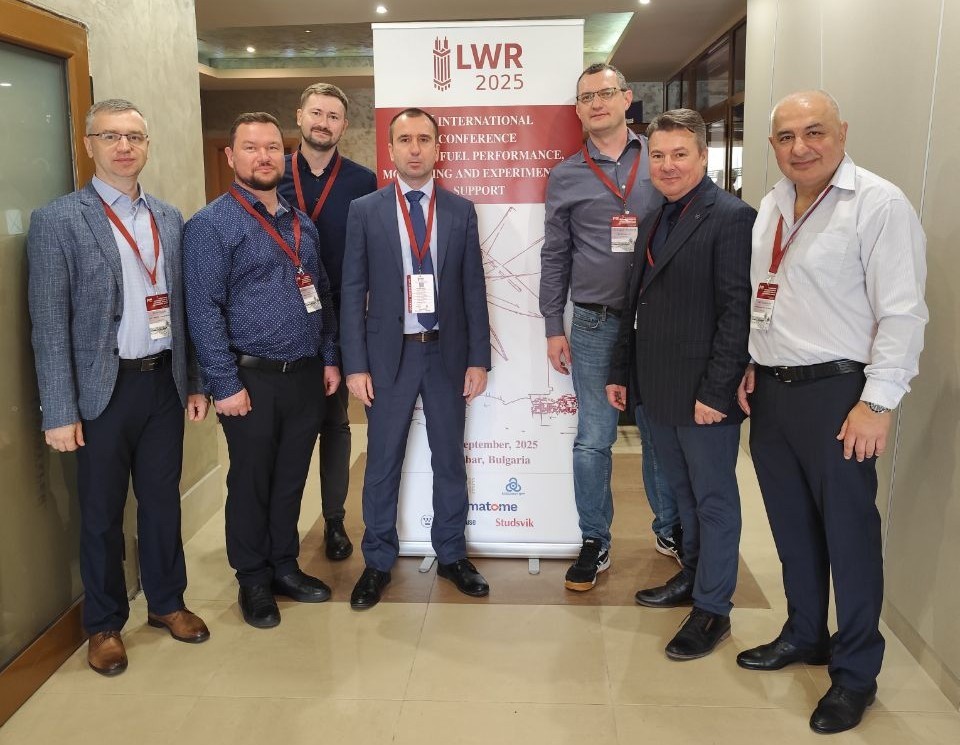
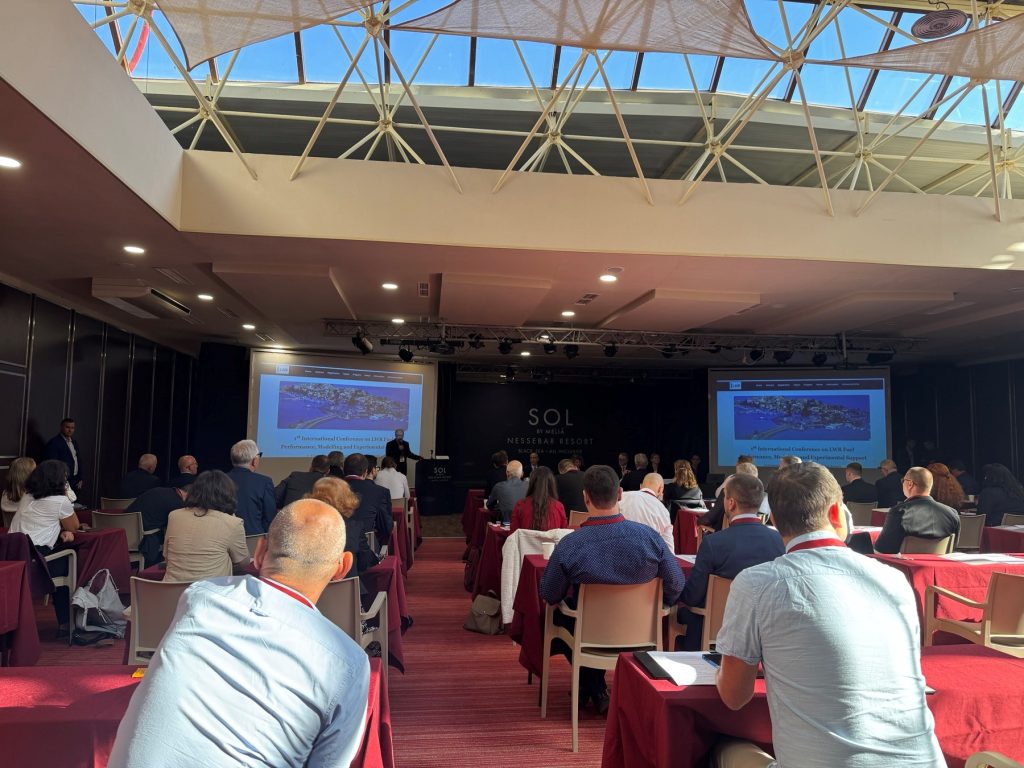
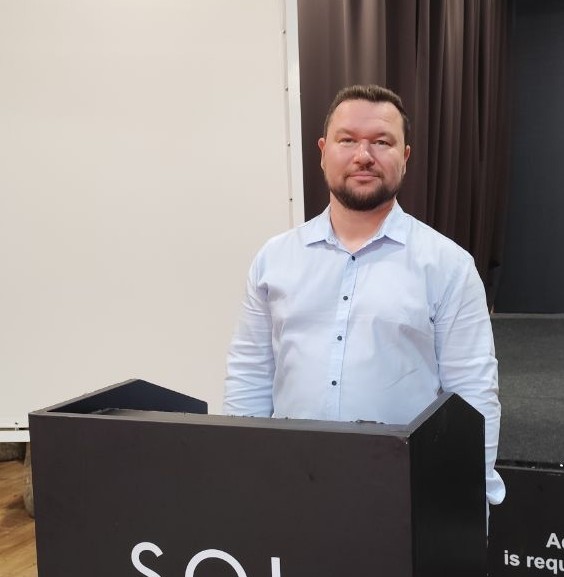
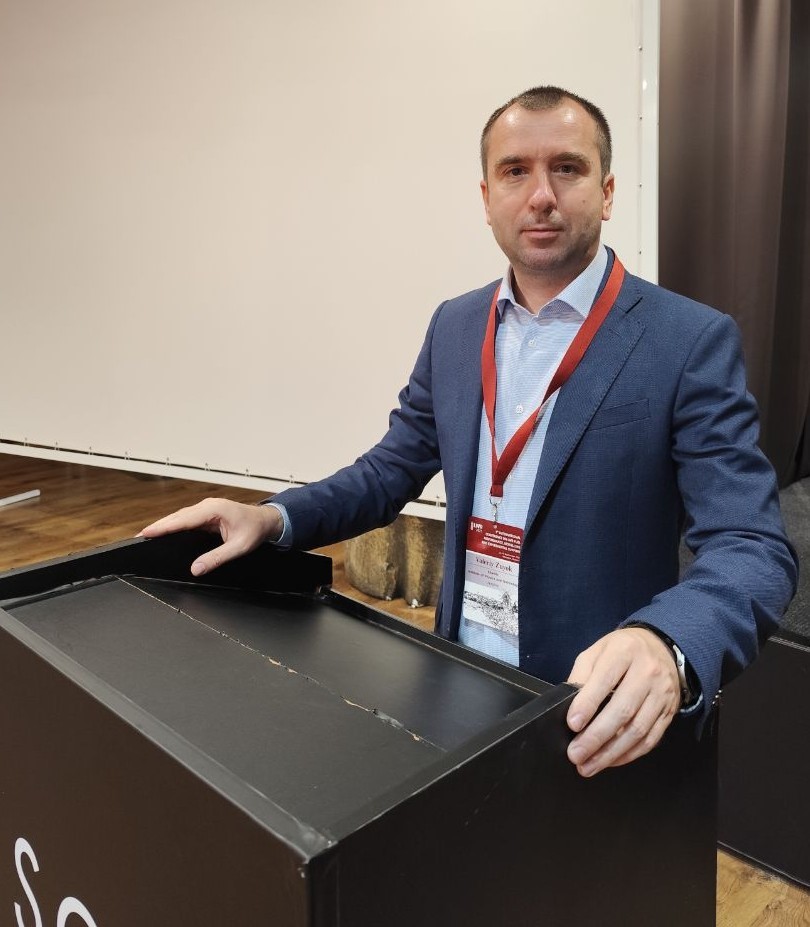
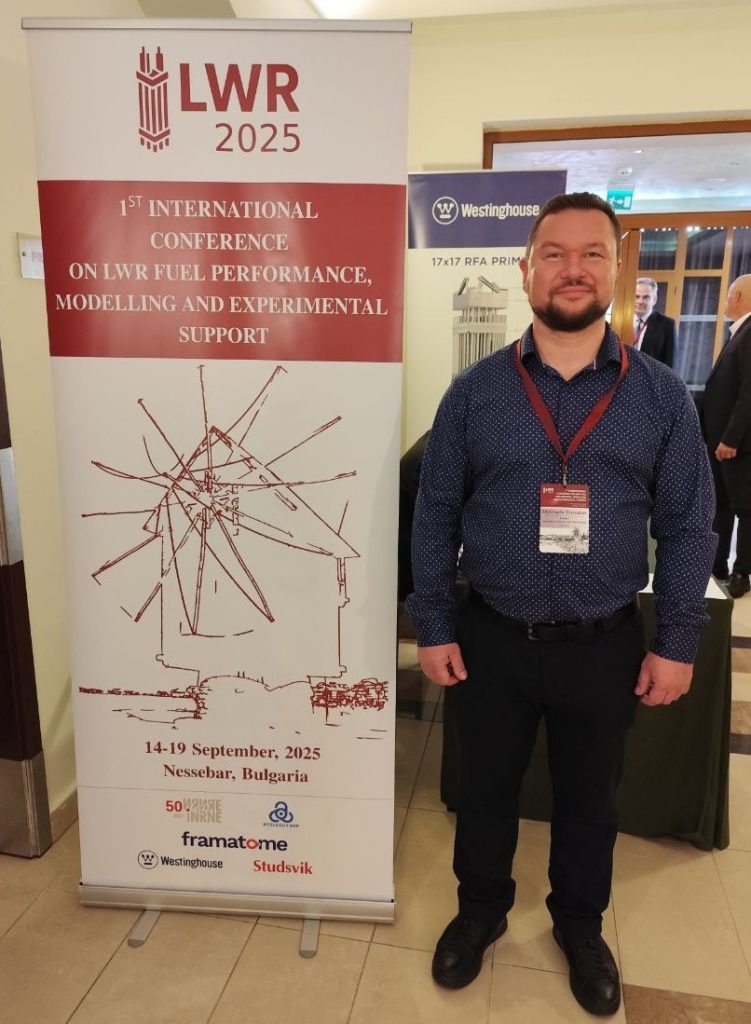
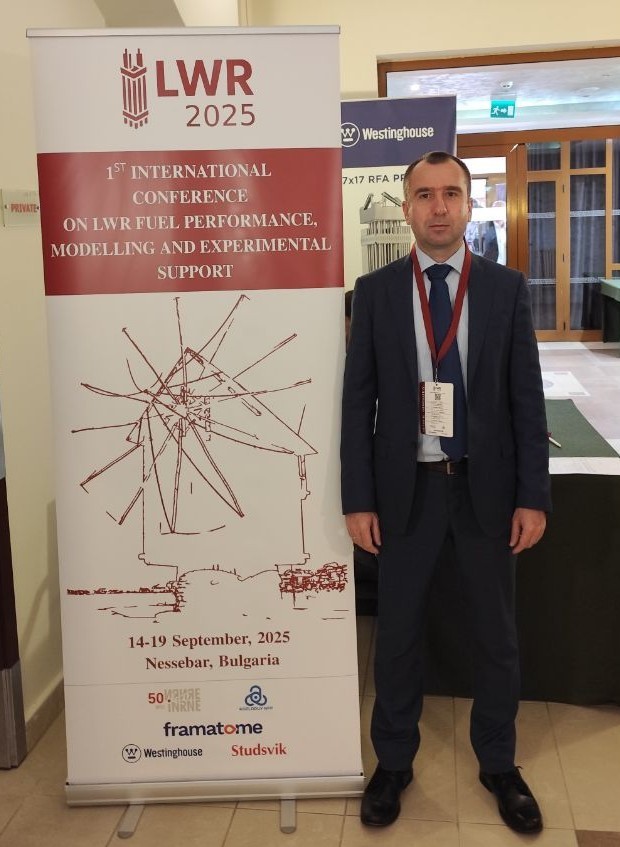
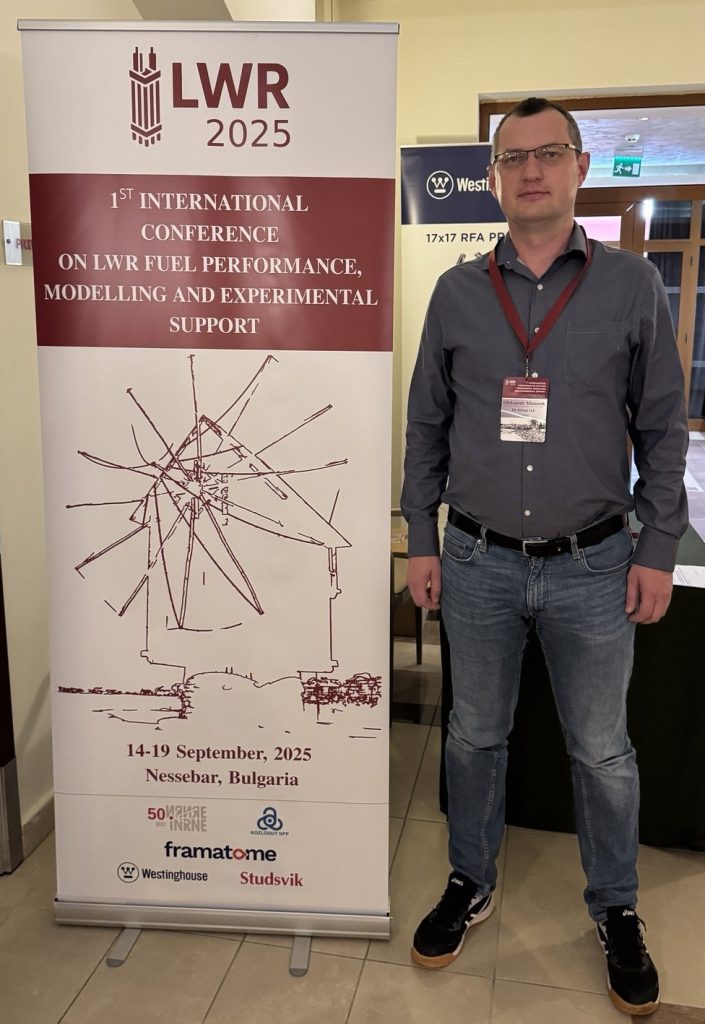
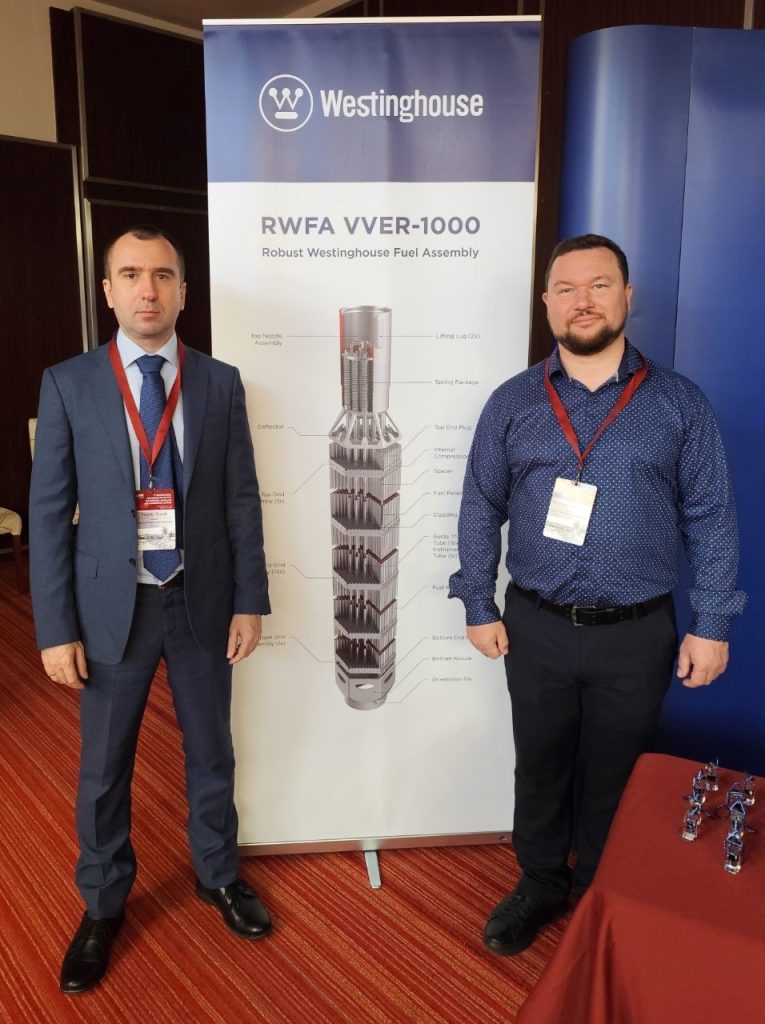
Members of the Ukrainian Nuclear Society — Valeriy Zuyok, Mykhailo Tretiakov, and Oleksandr Mazurok — took part in the “1st International Conference on LWR Fuel Performance, Modelling and Experimental Support”, held on September 14–19, 2025, in Nessebar, Bulgaria. The conference was organized by the Institute for Nuclear Research and Nuclear Energy of the Bulgarian Academy of Sciences (INRNE-BAS) with the support of Framatome, Westinghouse, Studsvik, and Kozloduy NPP.
Although titled as the “first,” the conference continues the tradition of thirteen previous VVER Fuel Conferences (1994–2019), dedicated to the same topics and supported by various international partners.
The event served as a platform for sharing knowledge on fuel performance and modelling, combining academic research, industrial experience, and operational insights. Scientists, NPP experts, reactor designers, regulators, and suppliers discussed the latest advancements in fuel technologies for light water reactors (LWRs) — including VVER reactors operating in Ukraine. The program included sessions on:
- Fuel properties and operation experience;
- Fuel design improvement and performance;
- Fuel modelling and experimental support;
- Fuel safety and quality control;
- Spent fuel management and efficiency.
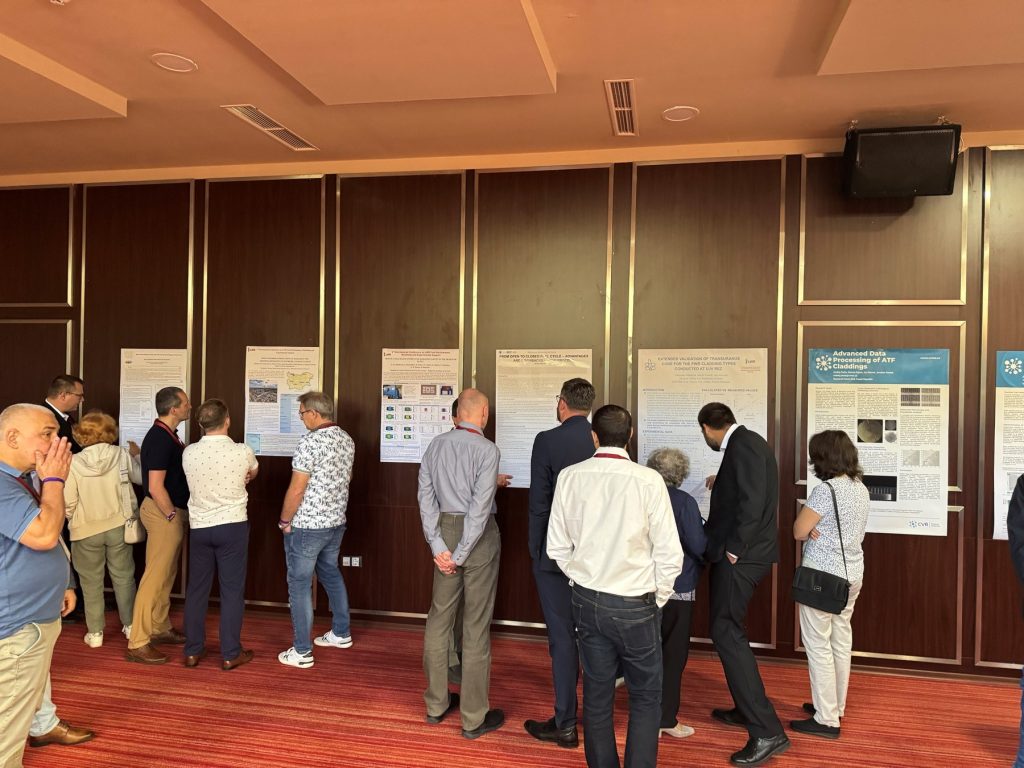
More than 50 reports were presented, and their abstracts published in the official Book of Abstracts. The conference encouraged active discussion of each report and exchange of views among nuclear professionals from various countries.
Ukraine was represented by a strong team of experts from:
- JSC “NNEGC “Energoatom” (Pavlo Biziuk, Roman Hlushenkov),
- National Science Center “Kharkiv Institute of Physics and Technology” (NSC KIPT) (Valeriy Zuyok, Mykhailo Tretiakov),
- and the Energy Safety Group LLC (Enerhobezpeka Group) (Oleksandr Mazurok).
Presentations by UkrNS Members
In co-authorship with UkrNS members, three reports were presented.
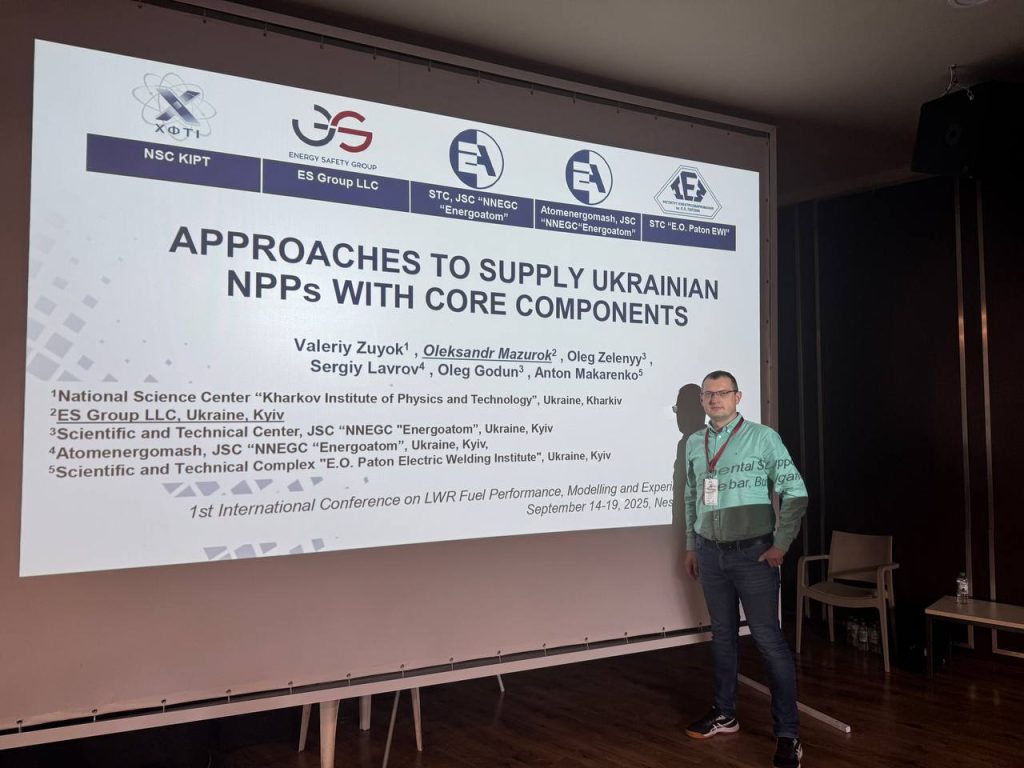
The report “Approaches to Supply Ukrainian NPPs with Core Components” showcased Ukraine’s real experience in diversifying VVER (VVER-1000 and VVER-440) core components. . It also addressed the justification of the safe operation and service time extension of operating RCCAs and the qualification of newly developed RCCAs (VVER-1000), Control part of Follower Assemblies (VVER-440), and Shield Assemblies (VVER-440) of national design. Participants agreed that, with the scientific support of Ukraine’s private companies and research institutions (especially the “Nuclear Fuel Cycle” STE of NSC KIPT), Energoatom is timely implementing measures to secure alternative, nationally designed reactor core components — replacing items previously supplied exclusively by the RF. These diversification efforts may also be relevant for other European countries operating VVER reactors.
The report “Development of Neutron-Absorbing Materials and RCCA with Increased Performance for VVER-1000 Reactor” presented the results of high-level researches at NSC KIPT, demonstrating high readiness to produce control rods and control rod assemblies for VVER-1000 reactors with improved operational characteristics. The authors proposed an alternative RCCA design, geometrically identical to the standard one but featuring a pellet-type absorber material instead of the standard powder form, providing enhanced neutron absorption and reliability.
In the report “Studying the Integrity of SNF Rod Cladding at Various Stages of Dry Storage Technology Implementation” Ukrainian experts presented a methodology for predicting the performance of fuel rod claddings made of E110 (TVS-M/A) and ZIRLO (WFA/RWFA) alloys under thermal effects at different stages of dry storage technology implementation. The calculation method, based on laboratory simulation tests, can be applied to justify cladding integrity in any dry storage facility containing these alloys. This approach has already been implemented at the Spent Fuel Dry Storage Facility (SFDSF) at Zaporizhzhia NPP.
Other Ukrainian Contributions
Roman Hlushenkov (Energoatom) presented the report “Spent Nuclear Fuel Management of the Ukrainian Nuclear Operator” outlining Ukraine’s deferred decision strategy based on interim dry storage and long-term in-country storage. Currently, long-term storage is provided at two sites:
- the SFDSF at Zaporizhzhia NPP site, and
- the Centralized (Consolidated) Spent Fuel Storage Facility (CSFSF) in the Chornobyl Exclusion Zone, which receives spent fuel from the Rivne, Khmelnytskyi, and South-Ukraine NPPs.
The commissioning of the CSFSF has significantly reduced Ukraine’s historical dependence on the RF for spent fuel storage services.
Pavlo Biziuk (Energoatom) presented “Modelling of Power Distribution Control Processes in the Cores of VVER-1000 Reactors Using ANC-H Reactor Core Simulator Program (ARCS)”, introducing a self-developed reactor core simulation software designed to predict core conditions during frequent power reductions caused by russian attacks on critical infrastructure. The software enables graphical modelling and predictive analysis of power control processes in VVER cores using the ANC-H code. The ARCS software can be applied for both TVEL, mixed, and Westinghouse VVER-1000 fuel assemblies.
International Highlights
International partners also presented notable work. Westinghouse shared updates on the evolution of its VVER-1000 and VVER-440 fuel assembly designs. The report “Mitigation of Local Power Peaking by Introducing Hf Spacer Pins in the VVER-440 Follower Fuel Assembly” detailed innovations in the NOVA E-6 follower FA for VVER-440 reactors, proposing hafnium (Hf) spacer rods to reduce local power peaking.
Further improvements for the VVER-1000 fuel market, including a next-generation zirconium-alloy spacer grid design, are part of Westinghouse’s long-term strategy to enhance neutronic, mechanical, and thermal-hydraulic performance.
Framatome specialists delivered the largest number of reports (~21), covering zirconium alloy testing (M5 Framatome, Q12), accident-tolerant fuel (ATF) developments, and new VVER-440 and VVER-1000 fuel assembly projects. Framatome started developing VVER-1000 fuel in 2019 and VVER-440 fuel in 2024, with full qualification of the VVER-1000 design expected by 2028 and the first fuel loading projected for 2030.
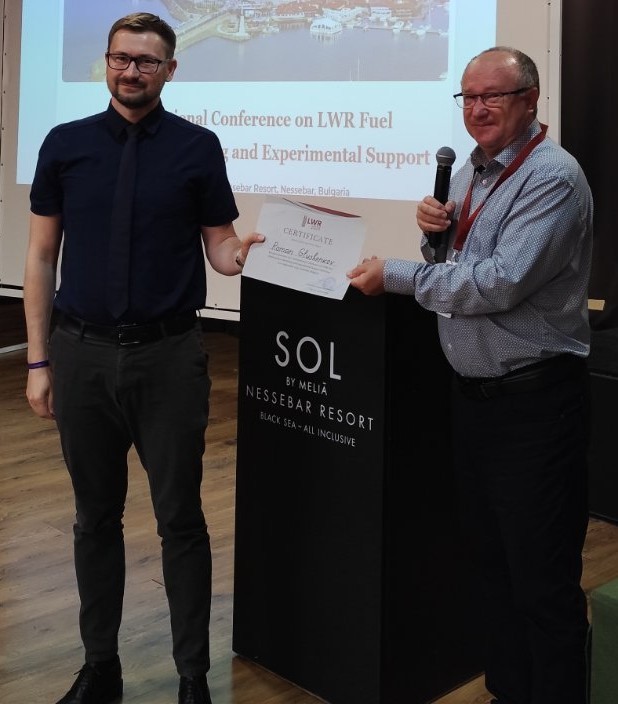
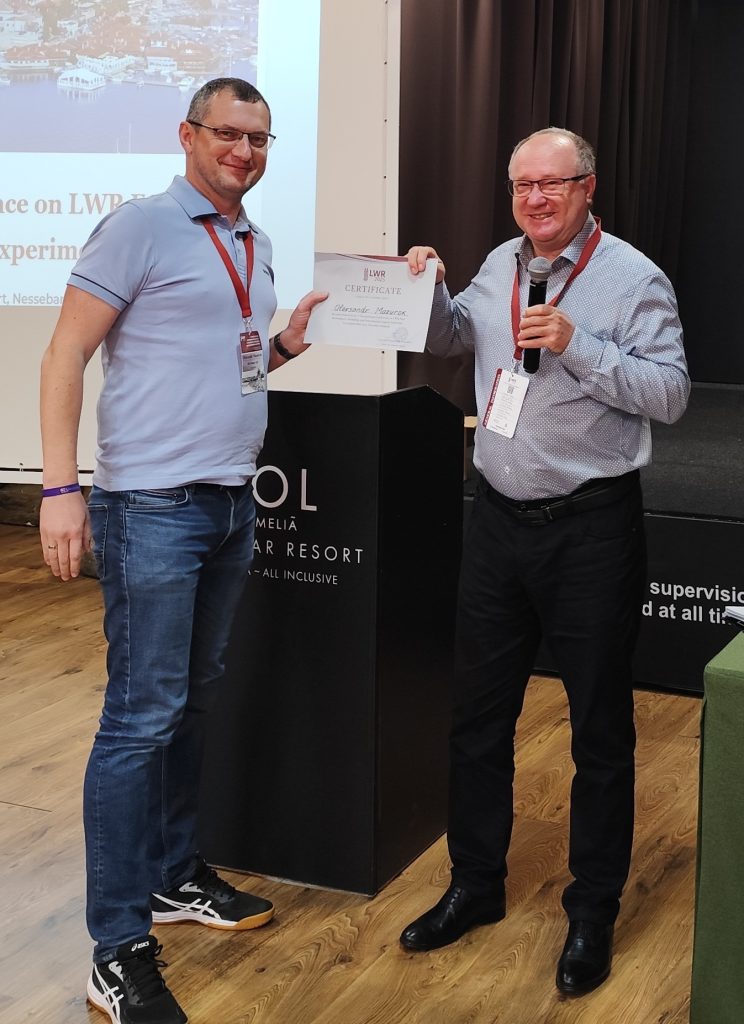
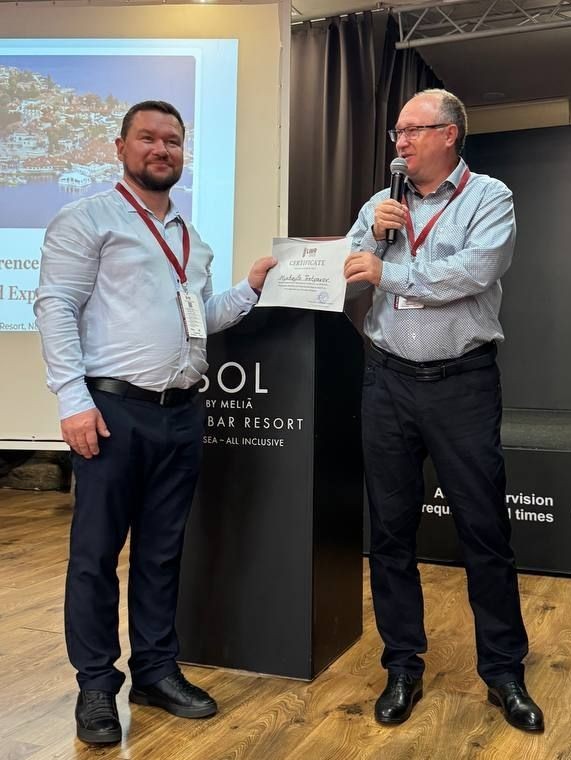
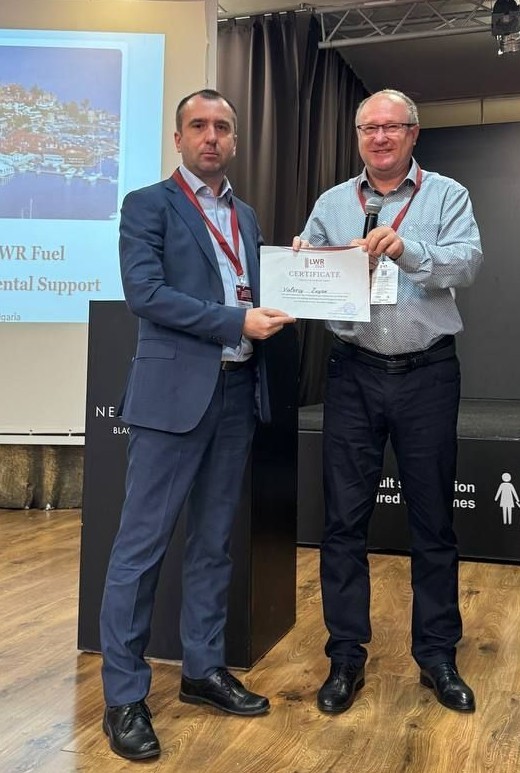
At the conclusion of the conference, all presenters received participation certificates from Prof. Dimitar Tonev, Director of the INRNE-BAS. The participation of Ukrainian specialists demonstrated to the international nuclear community the high level of national expertise in core component diversification, development of advanced RCCAs and absorber materials, and safe spent fuel storage technologies, while also strengthening direct cooperation with leading international nuclear companies and research institution
Participation of UkrNS Members in the International Conference on Nuclear Fuel
Members of the Ukrainian Nuclear Society — Valeriy Zuyok, Mykhailo Tretiakov, and Oleksandr Mazurok — took part in the “1st International Conference on LWR Fuel Performance, Modelling and Experimental Support”, held on September 14–19, 2025, in Nessebar, Bulgaria. The conference was organized by the Institute for Nuclear Research and Nuclear Energy of the Bulgarian Academy of Sciences (INRNE-BAS) with the support of Framatome, Westinghouse, Studsvik, and Kozloduy NPP.
Although titled as the “first,” the conference continues the tradition of thirteen previous VVER Fuel Conferences (1994–2019), dedicated to the same topics and supported by various international partners.
The event served as a platform for sharing knowledge on fuel performance and modelling, combining academic research, industrial experience, and operational insights. Scientists, NPP experts, reactor designers, regulators, and suppliers discussed the latest advancements in fuel technologies for light water reactors (LWRs) — including VVER reactors operating in Ukraine. The program included sessions on:
- Fuel properties and operation experience;
- Fuel design improvement and performance;
- Fuel modelling and experimental support;
- Fuel safety and quality control;
- Spent fuel management and efficiency.
More than 50 reports were presented, and their abstracts published in the official Book of Abstracts. The conference encouraged active discussion of each report and exchange of views among nuclear professionals from various countries.
Ukraine was represented by a strong team of experts from:
- JSC “NNEGC “Energoatom” (Pavlo Biziuk, Roman Hlushenkov),
- National Science Center “Kharkiv Institute of Physics and Technology” (NSC KIPT) (Valeriy Zuyok, Mykhailo Tretiakov),
- and the Energy Safety Group LLC (Enerhobezpeka Group) (Oleksandr Mazurok).
Presentations by UkrNS Members
In co-authorship with UkrNS members, three reports were presented.
The report “Approaches to Supply Ukrainian NPPs with Core Components” showcased Ukraine’s real experience in diversifying VVER (VVER-1000 and VVER-440) core components. . It also addressed the justification of the safe operation and service time extension of operating RCCAs and the qualification of newly developed RCCAs (VVER-1000), Control part of Follower Assemblies (VVER-440), and Shield Assemblies (VVER-440) of national design. Participants agreed that, with the scientific support of Ukraine’s private companies and research institutions (especially the “Nuclear Fuel Cycle” STE of NSC KIPT), Energoatom is timely implementing measures to secure alternative, nationally designed reactor core components — replacing items previously supplied exclusively by the RF. These diversification efforts may also be relevant for other European countries operating VVER reactors.
The report “Development of Neutron-Absorbing Materials and RCCA with Increased Performance for VVER-1000 Reactor” presented the results of high-level researches at NSC KIPT, demonstrating high readiness to produce control rods and control rod assemblies for VVER-1000 reactors with improved operational characteristics. The authors proposed an alternative RCCA design, geometrically identical to the standard one but featuring a pellet-type absorber material instead of the standard powder form, providing enhanced neutron absorption and reliability.
In the report “Studying the Integrity of SNF Rod Cladding at Various Stages of Dry Storage Technology Implementation” Ukrainian experts presented a methodology for predicting the performance of fuel rod claddings made of E110 (TVS-M/A) and ZIRLO (WFA/RWFA) alloys under thermal effects at different stages of dry storage technology implementation. The calculation method, based on laboratory simulation tests, can be applied to justify cladding integrity in any dry storage facility containing these alloys. This approach has already been implemented at the Spent Fuel Dry Storage Facility (SFDSF) at Zaporizhzhia NPP.
Other Ukrainian Contributions
Roman Hlushenkov (Energoatom) presented the report “Spent Nuclear Fuel Management of the Ukrainian Nuclear Operator” outlining Ukraine’s deferred decision strategy based on interim dry storage and long-term in-country storage. Currently, long-term storage is provided at two sites:
- the SFDSF at Zaporizhzhia NPP site, and
- the Centralized (Consolidated) Spent Fuel Storage Facility (CSFSF) in the Chornobyl Exclusion Zone, which receives spent fuel from the Rivne, Khmelnytskyi, and South-Ukraine NPPs.
The commissioning of the CSFSF has significantly reduced Ukraine’s historical dependence on the RF for spent fuel storage services.
Pavlo Biziuk (Energoatom) presented “Modelling of Power Distribution Control Processes in the Cores of VVER-1000 Reactors Using ANC-H Reactor Core Simulator Program (ARCS)”, introducing a self-developed reactor core simulation software designed to predict core conditions during frequent power reductions caused by russian attacks on critical infrastructure. The software enables graphical modelling and predictive analysis of power control processes in VVER cores using the ANC-H code. The ARCS software can be applied for both TVEL, mixed, and Westinghouse VVER-1000 fuel assemblies.
International Highlights
International partners also presented notable work. Westinghouse shared updates on the evolution of its VVER-1000 and VVER-440 fuel assembly designs. The report “Mitigation of Local Power Peaking by Introducing Hf Spacer Pins in the VVER-440 Follower Fuel Assembly” detailed innovations in the NOVA E-6 follower FA for VVER-440 reactors, proposing hafnium (Hf) spacer rods to reduce local power peaking.
Further improvements for the VVER-1000 fuel market, including a next-generation zirconium-alloy spacer grid design, are part of Westinghouse’s long-term strategy to enhance neutronic, mechanical, and thermal-hydraulic performance.
Framatome specialists delivered the largest number of reports (~21), covering zirconium alloy testing (M5 Framatome, Q12), accident-tolerant fuel (ATF) developments, and new VVER-440 and VVER-1000 fuel assembly projects. Framatome started developing VVER-1000 fuel in 2019 and VVER-440 fuel in 2024, with full qualification of the VVER-1000 design expected by 2028 and the first fuel loading projected for 2030.
At the conclusion of the conference, all presenters received participation certificates from Prof. Dimitar Tonev, Director of the INRNE-BAS. The participation of Ukrainian specialists demonstrated to the international nuclear community the high level of national expertise in core component diversification, development of advanced RCCAs and absorber materials, and safe spent fuel storage technologies, while also strengthening direct cooperation with leading international nuclear companies and research institution