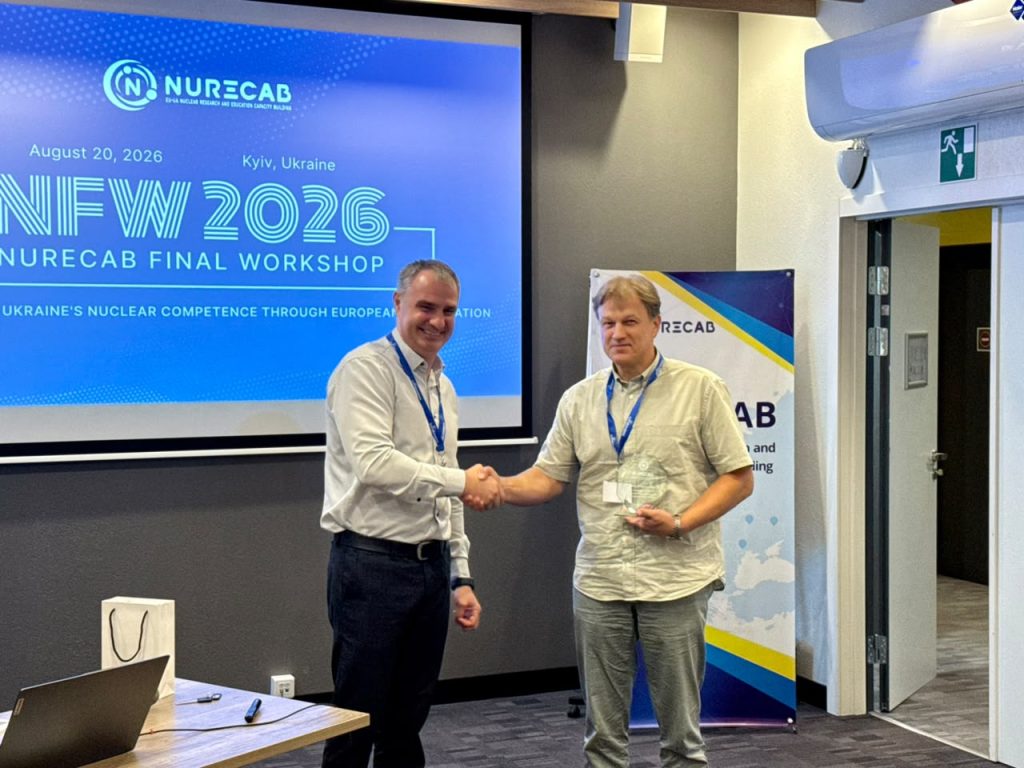
First Nurecab project completed
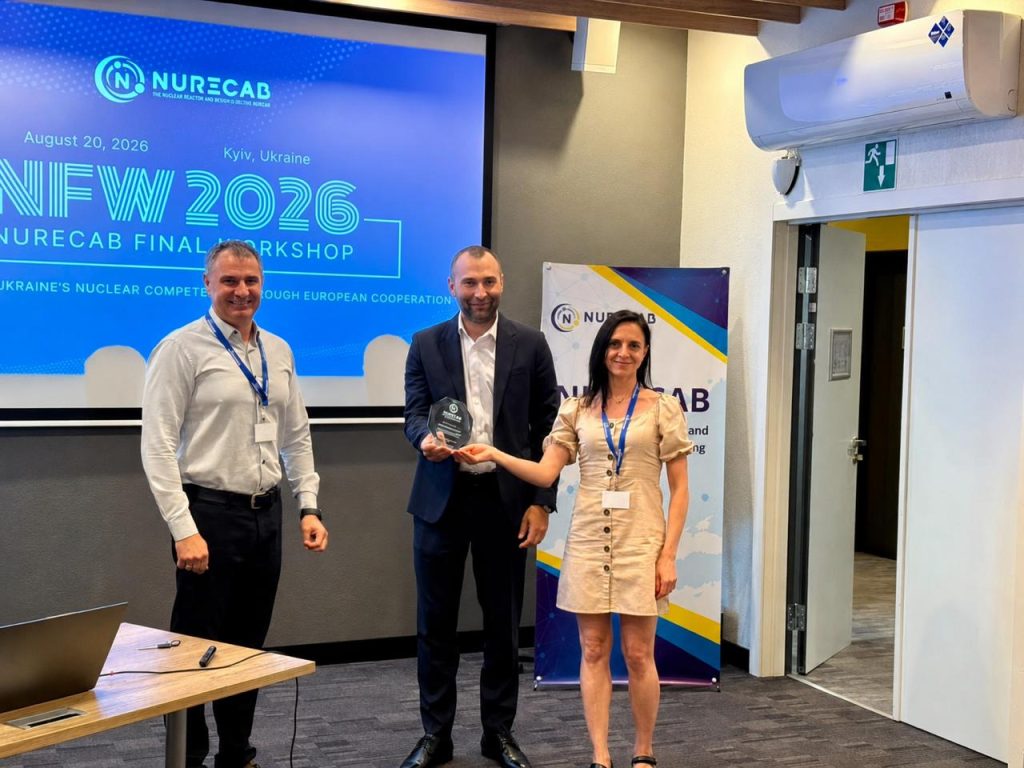
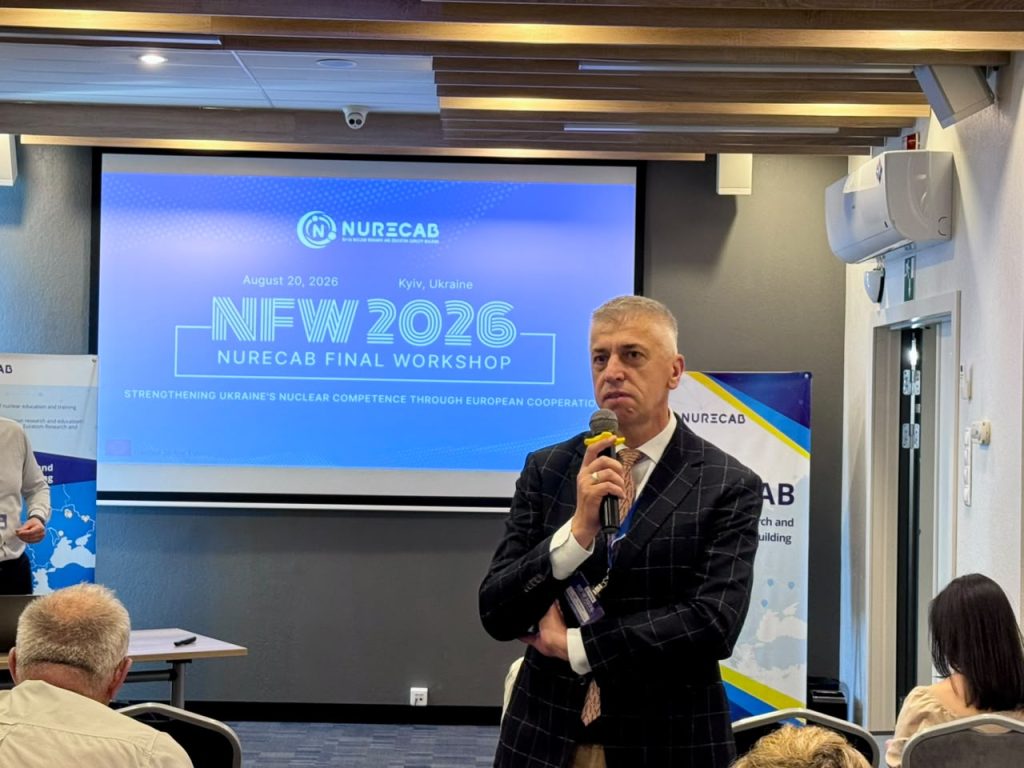
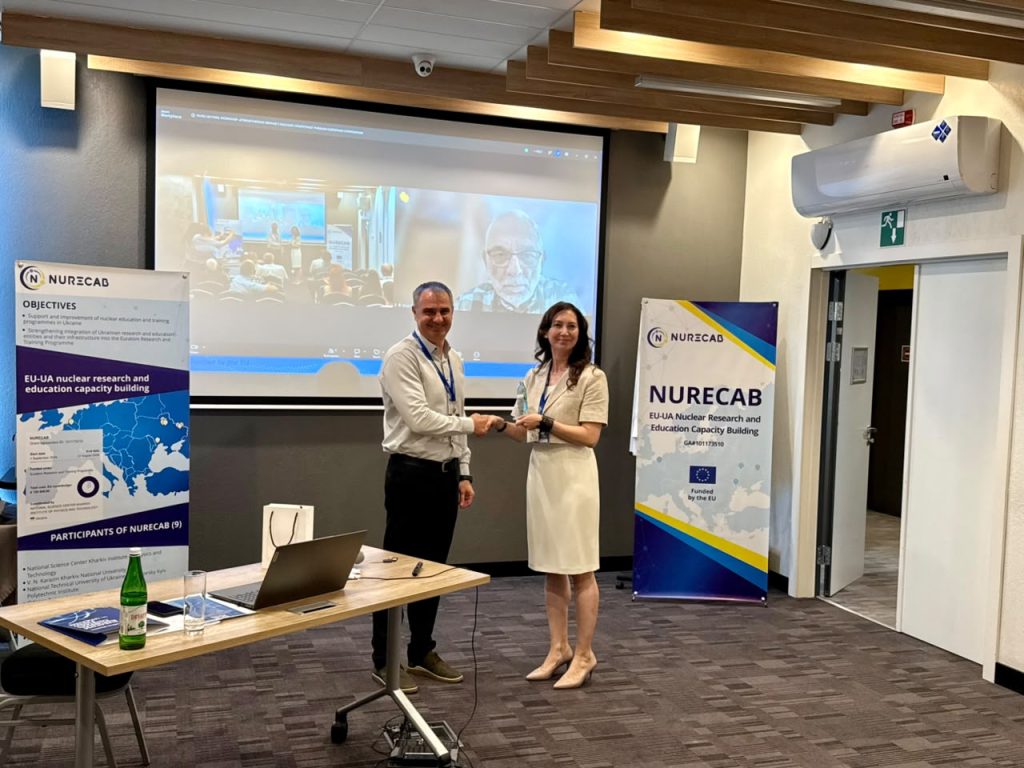
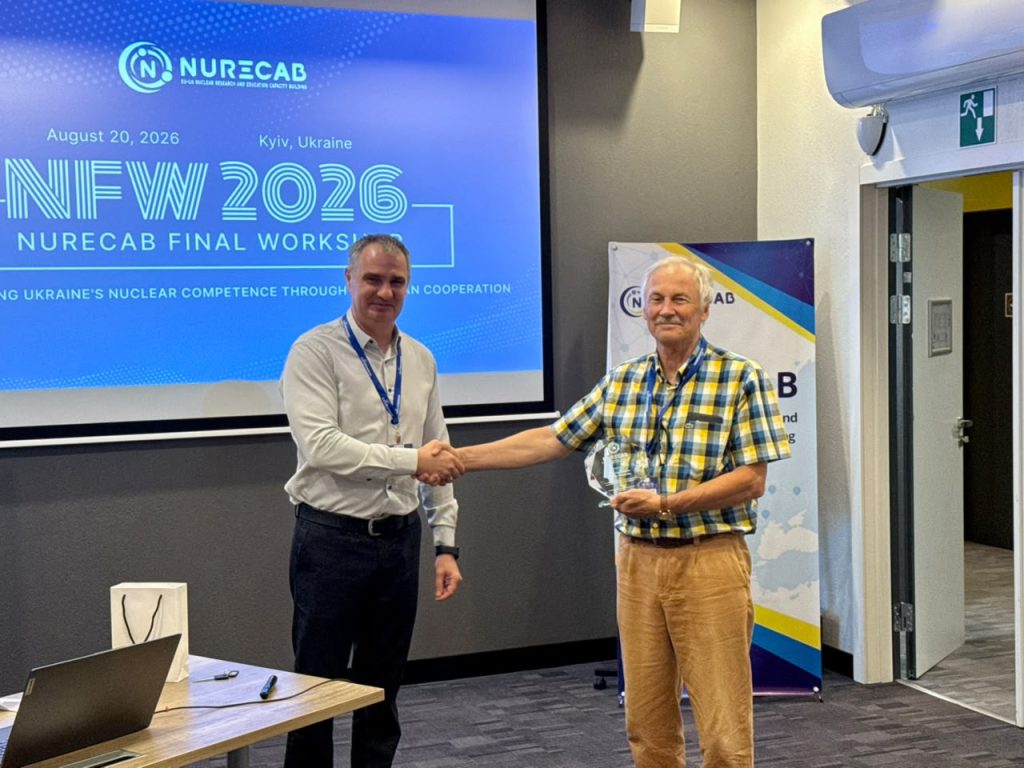
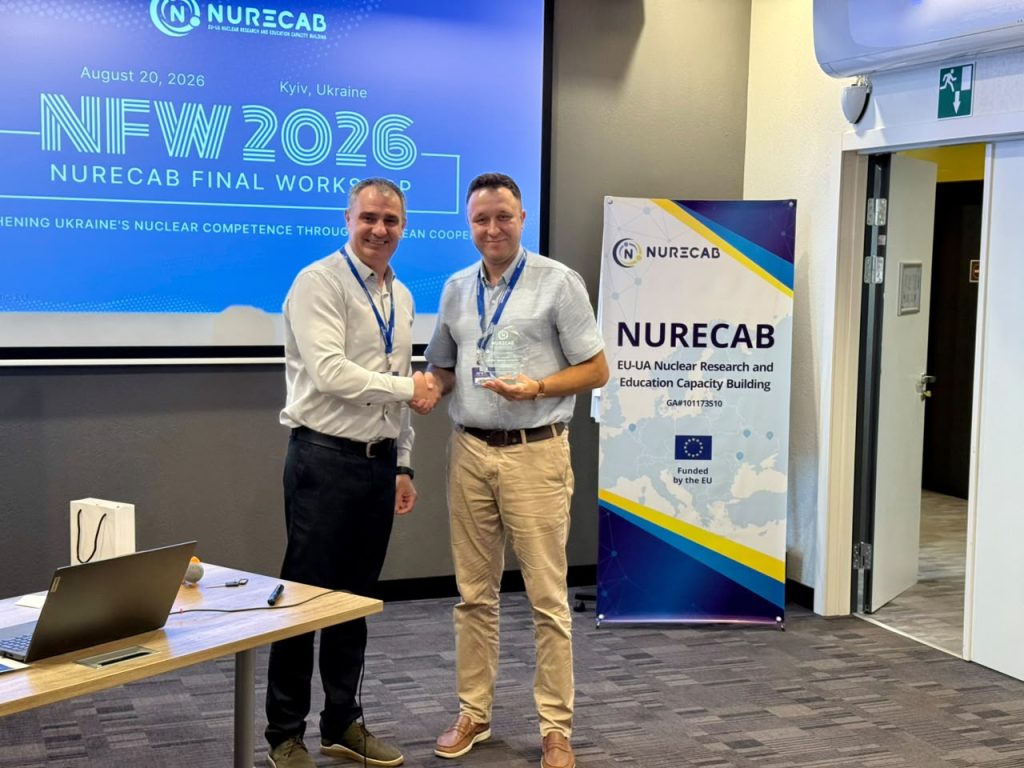
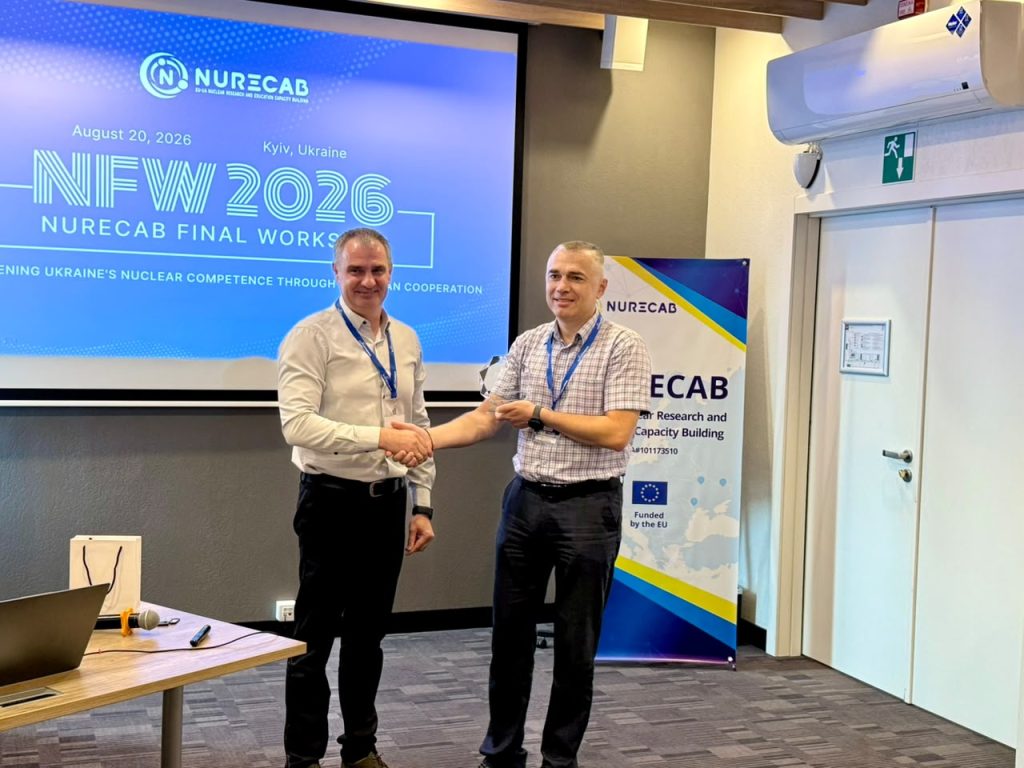
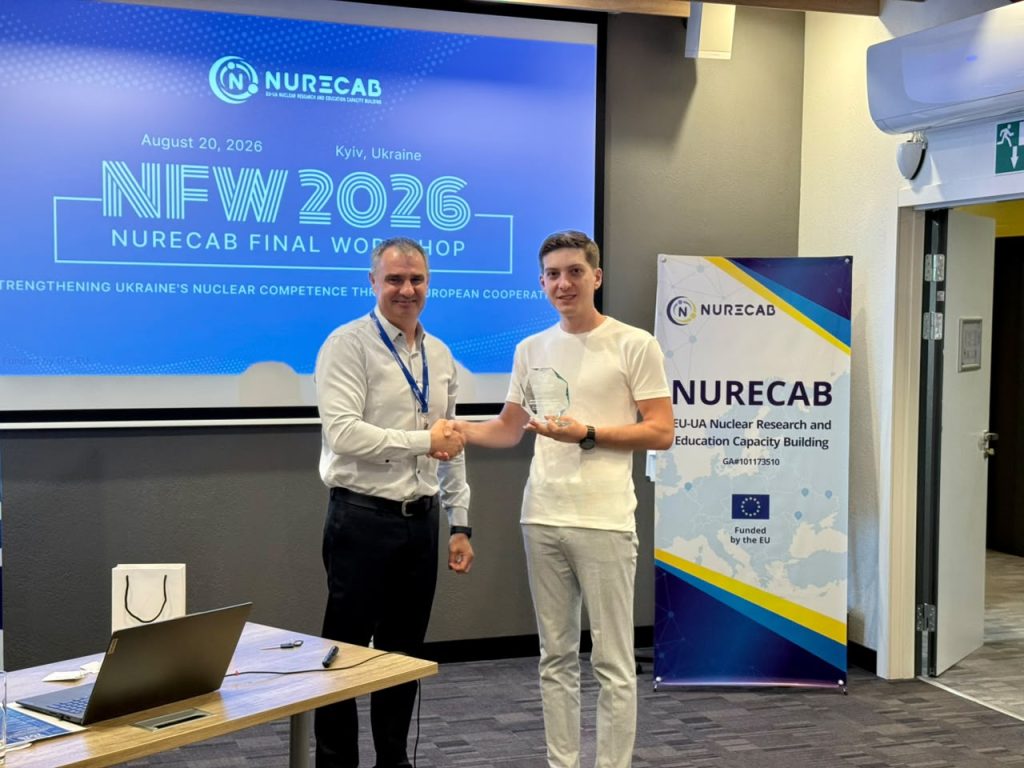
On August 20, 2026, Kyiv hosted the final workshop of the international Nurecab project (“Strengthening Ukraine’s Nuclear Competence through European Cooperation”), funded by the European Union under the Euratom Research and Training Programme (Horizon Europe).
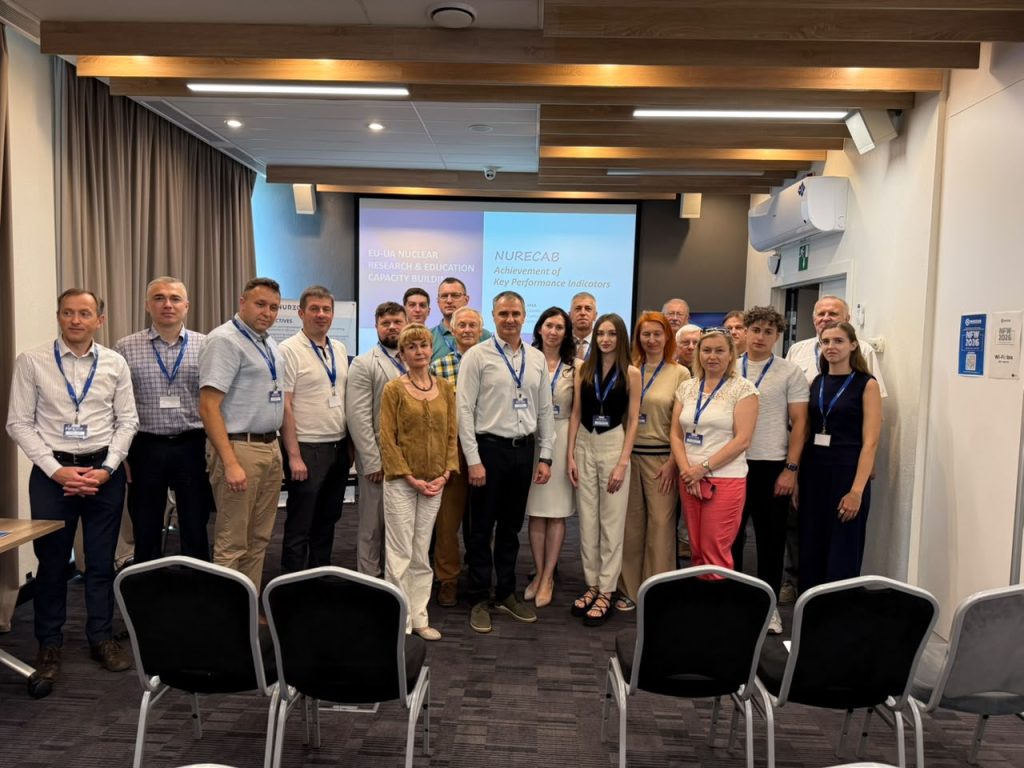
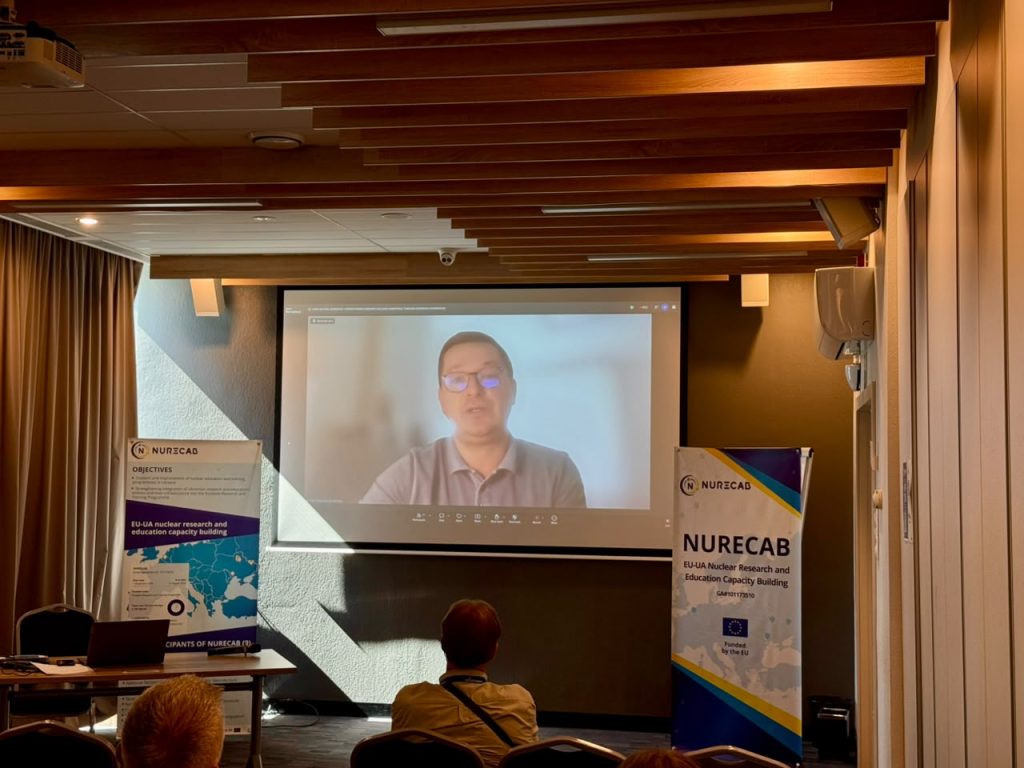
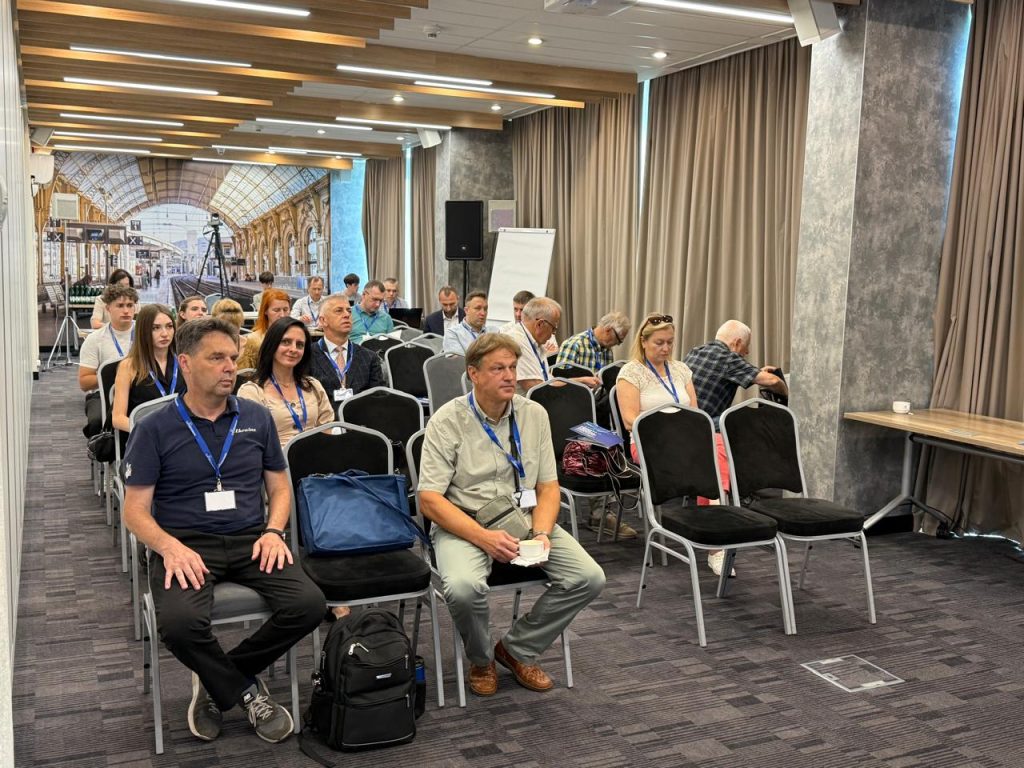
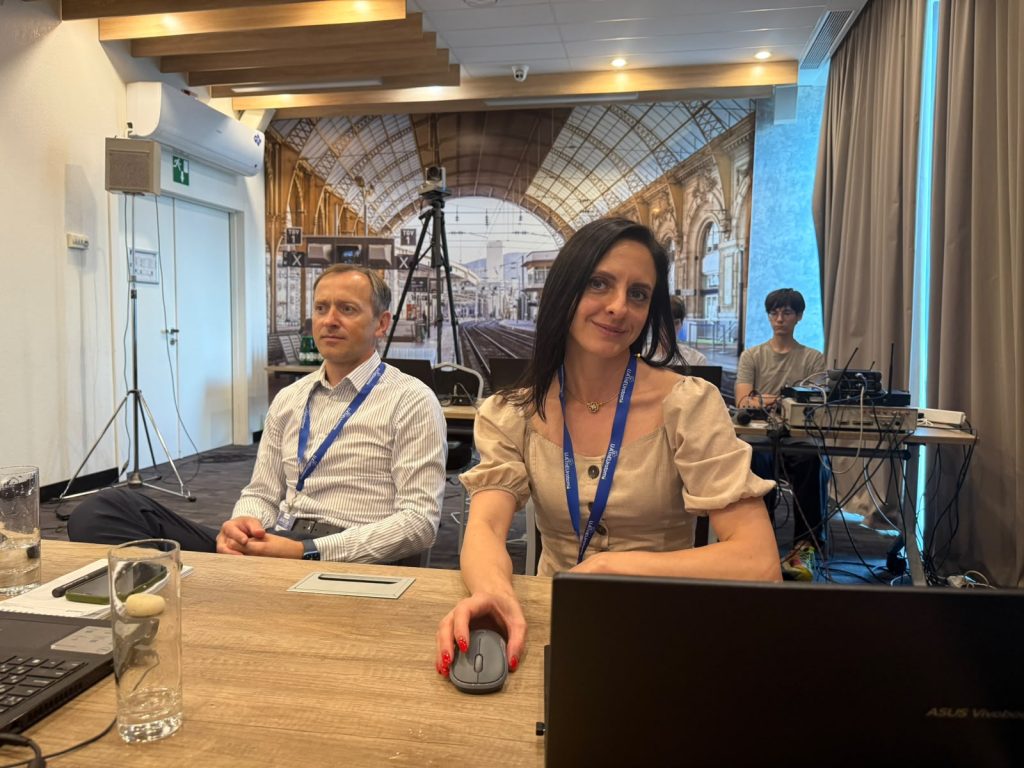
The event took place in a hybrid format, bringing together 76 leading experts, scientists, educators, and representatives of state institutions: 26 participants joined offline in Kyiv and 50 via videoconference. The final meeting served as an important platform for presenting the project’s key achievements, discussing the development of nuclear education and science in Ukraine, and outlining new vectors of European cooperation.
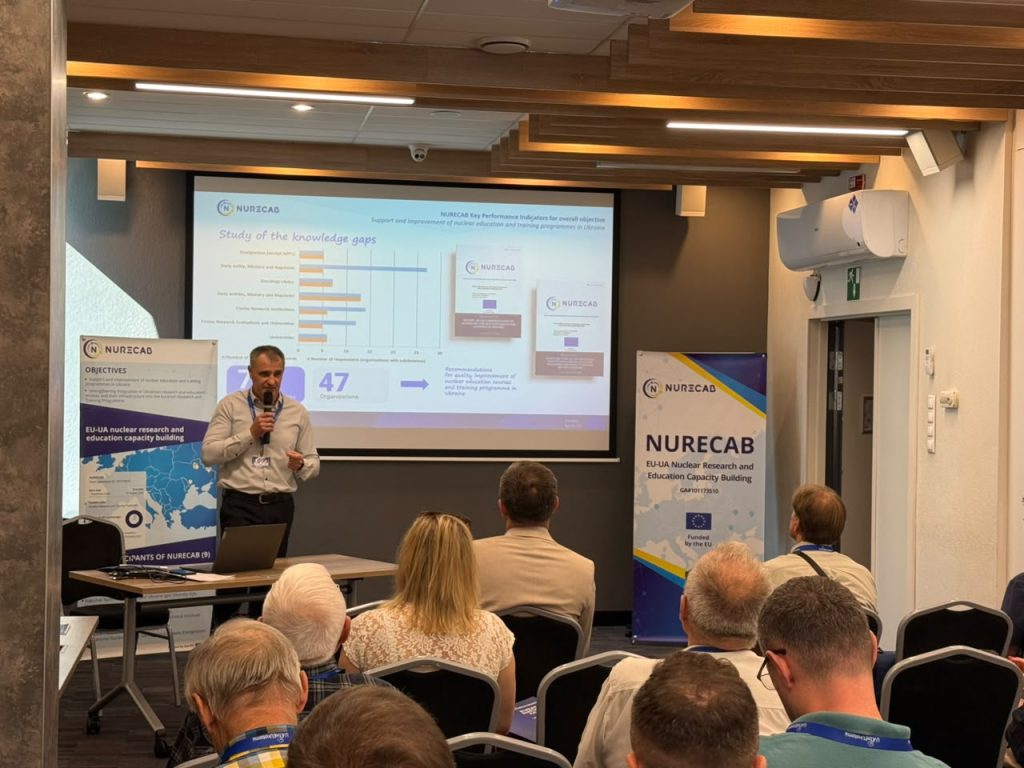
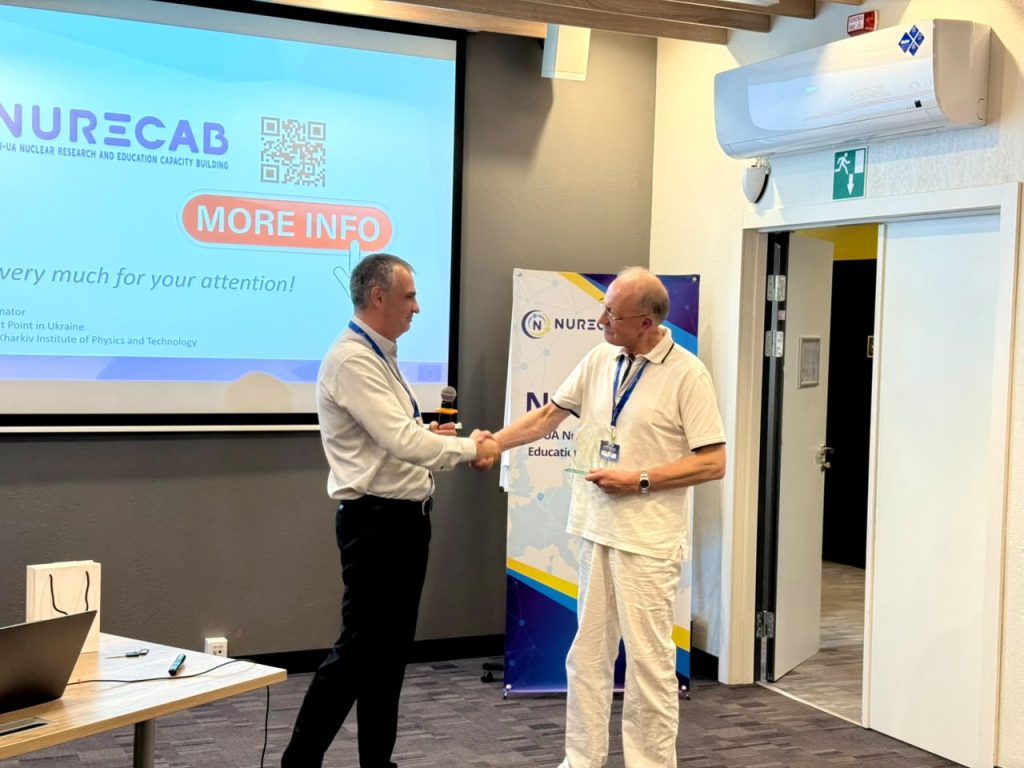
The official part of the event was opened by Serhii Puhach, Nurecab project coordinator from the National Science Center “Kharkiv Institute of Physics and Technology,” who emphasized the project’s significant contribution to strengthening the country’s nuclear competence. Welcome addresses were also delivered by Anatolii Babichev, Vice-Rector for Research and Education at V. N. Karazin Kharkiv National University; Dmytro Shamis, Director of the Human Resources Qualification Management Department at JSC NNEGC “Energoatom”; Viacheslav Shobik, Vice-Rector for Research and Pedagogical Work; and Ihor Harkusha, Academician-Secretary of the Department of Nuclear Physics and Energy of the National Academy of Sciences of Ukraine.
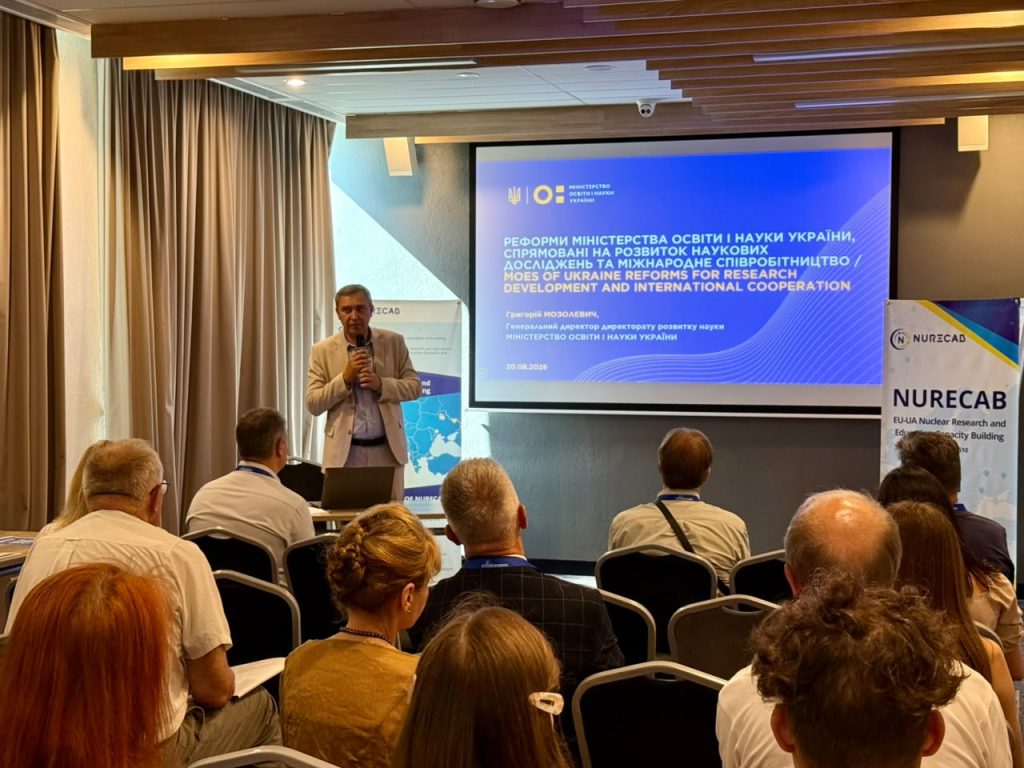
In addition, participants learned about modern reforms and tools for supporting scientific research and international cooperation presented by the Ministry of Education and Science of Ukraine, the EU Delegation to Ukraine, the National Research Foundation of Ukraine, and the Horizon Europe Office in Ukraine.
An important component of the first session was presentations by representatives of the European Nuclear Education Network and the European Commission’s Joint Research Centre on human resources development in the European nuclear sector.
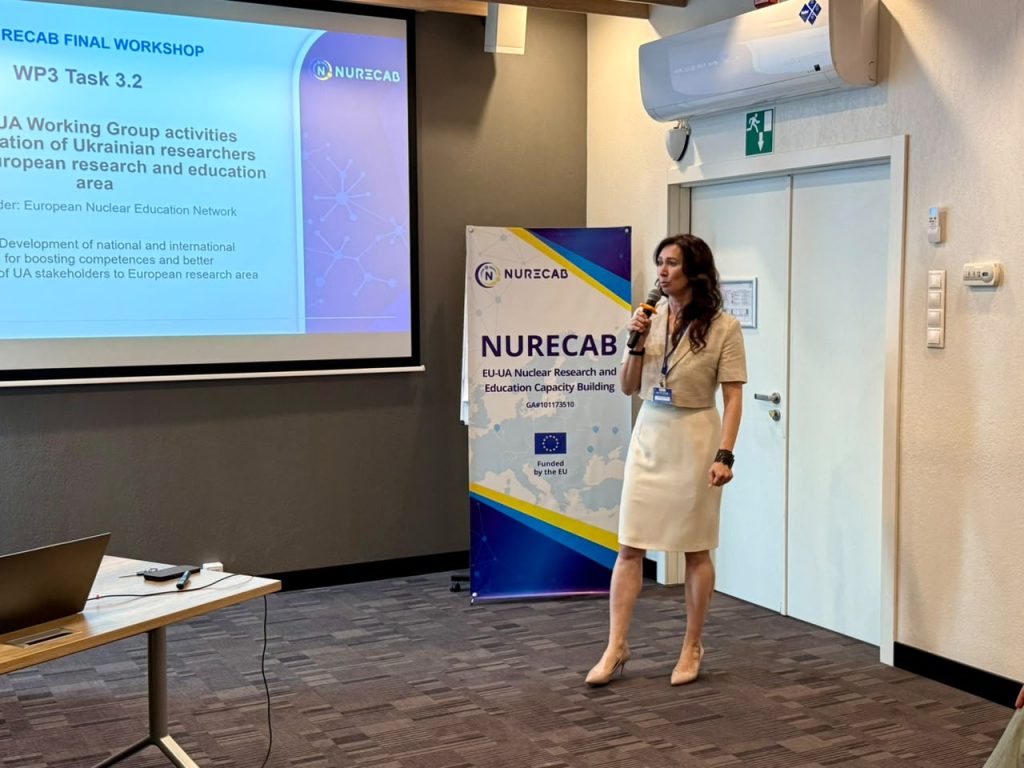
Central to the workshop program was the presentation of practical results across individual project work packages. Specifically, the summary of the needs analysis of Ukrainian higher education institutions was reviewed, and 10 new training courses in nuclear technology were presented, while the professional development stream demonstrated successful training programs for Ukrainian teachers and scientists. The results of integrating domestic specialists into the European Research Area and executing academic mobility programs were also highlighted in detail.
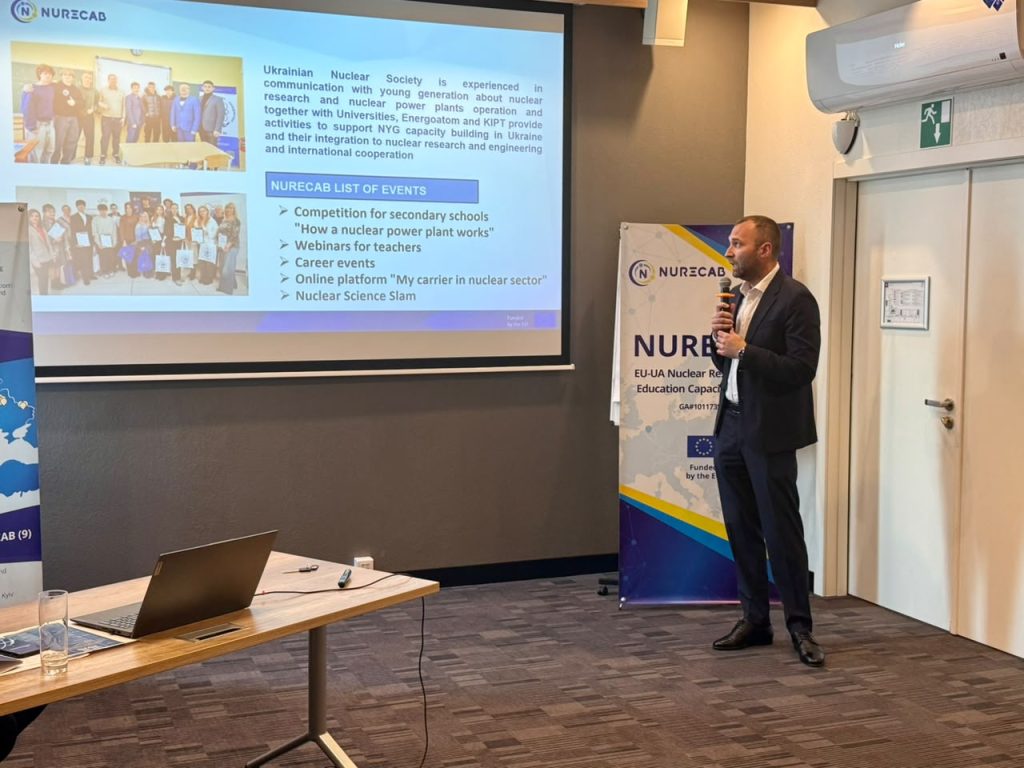
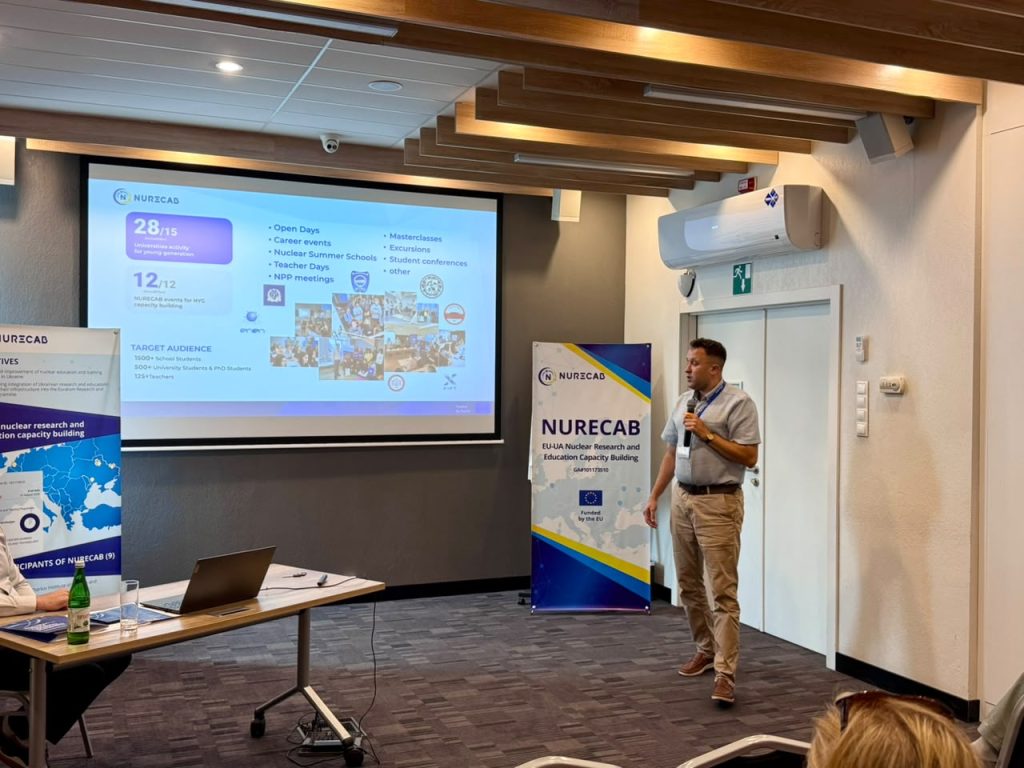
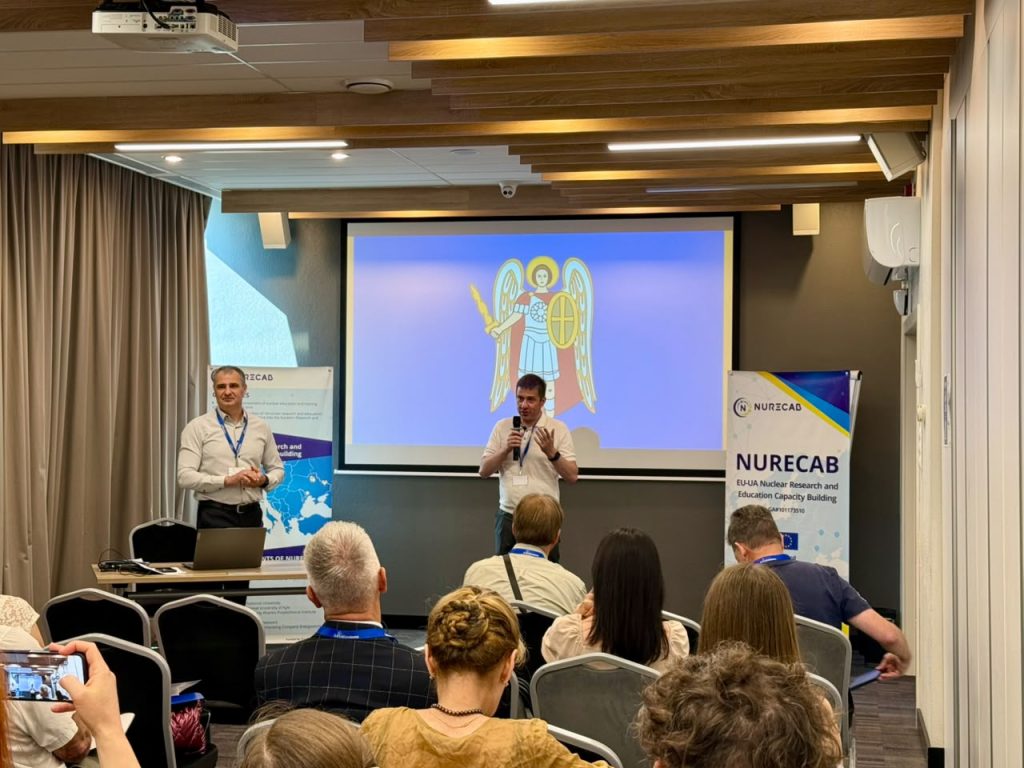
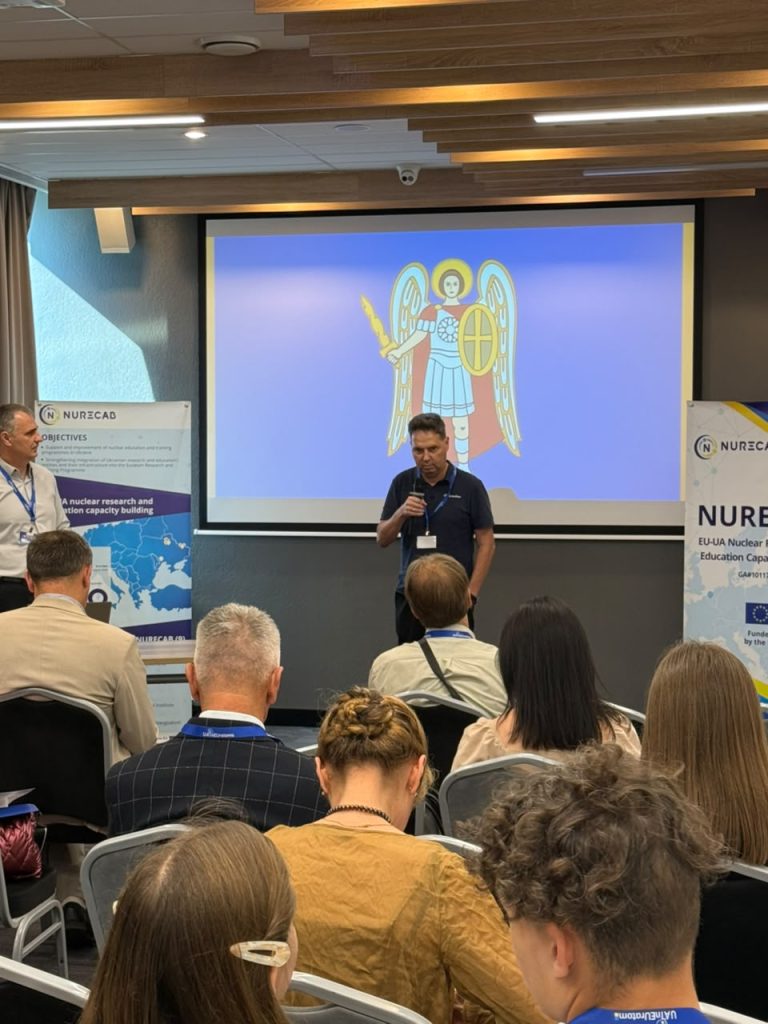
Special attention during the event was paid to the project’s youth vector, primarily led by the Ukrainian Nuclear Society (UkrNS). The results of this large-scale initiative were presented by Pylyp Kuznetsov, Director of the Educational and Scientific Institute “School of Physics and Technology” at V. N. Karazin Kharkiv National University, and Danylo Lavrenov, First Vice-President and Executive Secretary of UkrNS.
Throughout the project implementation, UkrNS executed a comprehensive set of initiatives aimed at attracting high school students and youth to the nuclear sector and enrollment in specialized higher education institutions. These included an interactive contest “How an NPP Works” for 70 lyceum students in Kyiv, a series of three all-Ukrainian career guidance webinars for teachers, high school students, and their parents reaching over 200 participants, career meetings titled “Energy Future: Your Career in the Nuclear Sector” featuring leading employers, and an informal science communication event, “Nuclear Science Slam.”
A key long-term outcome was the launch of a modern online platform, “My Career in the Nuclear Sector” (career.ukrns.org), which serves as a universal navigator for majors, educational programs, scholarships, and career opportunities for applicants and students.
The final sessions of the workshop focused on the communication strategy, the overall impact analysis of the Nurecab project, and prospects for further cooperation.
The Ukrainian Nuclear Society expresses its gratitude to consortium partners and European colleagues for their fruitful collaboration and continues its systematic work toward developing domestic nuclear science, education, and supporting young specialists.